
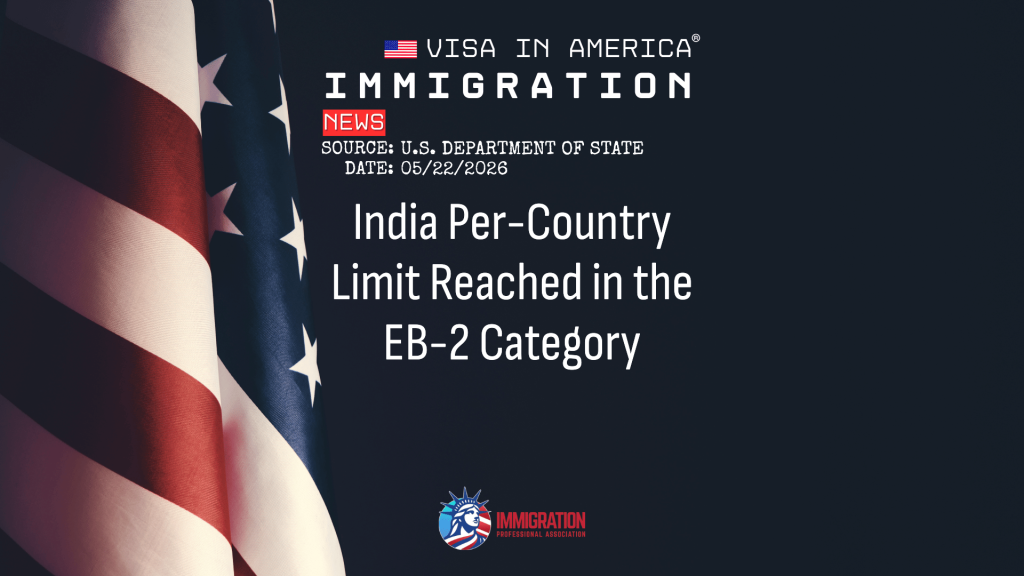
EB-2 Immigrant Visa Cap Reached for India in Current Fiscal Year
The U.S. Department of State has confirmed reaching the annual per-country numerical limit for EB-2 immigrant visas chargeable to India for the current fiscal year. Additional EB-2 visas for India until the next fiscal year when new numbers are available.
The announcement shows high demand in employment-based second preference and numerical limits set by the Immigration Act. Authority pauses visa issuance when a country’s annual allocation is exhausted until the fiscal year resets.
Understanding the EB-2 Category and Per-Country Limits
The EB-2 immigrant visa classification is generally reserved for individuals who hold advanced degrees or possess exceptional ability in the sciences, arts, or business. Employers sponsor most applicants in this category, although some qualify under the National Interest Waiver provisions.
U.S. immigration law imposes both worldwide annual limits on employment-based immigrant visas and per-country caps. Country limits prevent any country from using more than a set percentage of available immigrant visas annually. Backlogs occur when demand exceeds allocation, affecting visa availability based on priority dates in the Visa Bulletin.
For India, demand in the EB-2 category has consistently exceeded supply for several years. The current announcement indicates that the authority has now issued all remaining visa numbers allocated to India in this category for the fiscal year.
Practical Impact on Indian EB-2 Applicants
Indian nationals with approved EB-2 immigrant petitions may experience delays in immigrant visa issuance or final green card processing if they are subject to the India chargeability limit. A green card requires an immediately available visa number, even with an approved petition.
Officials may hold consular processing cases until they allocate new visa numbers at the next fiscal year’s start. Adjustment of status applicants may not receive approval until visa availability resumes under the Visa Bulletin.
This pause does not alter eligibility requirements for the EB-2 category, nor does it invalidate approved petitions. It reflects the statutory framework governing numerical limits and the timing of visa issuance.
Visa Bulletin Monitoring and Case Management Considerations
The Department of State’s Visa Bulletin will continue to govern priority date movement in the employment-based categories. Applicants and employers should monitor Visa Bulletins for updates on EB-2 India cutoff dates and new visa numbers.
When visa numbers are unavailable, case processing may remain pending despite meeting eligibility requirements. Employers and workers must ensure documentation, including work authorization, remains valid during extended wait times.
The notice highlights the imbalance between demand and supply in high-demand categories, especially for Indian nationals. The situation may reset with new allocations, but backlogs could still affect processing timelines.