Introduction
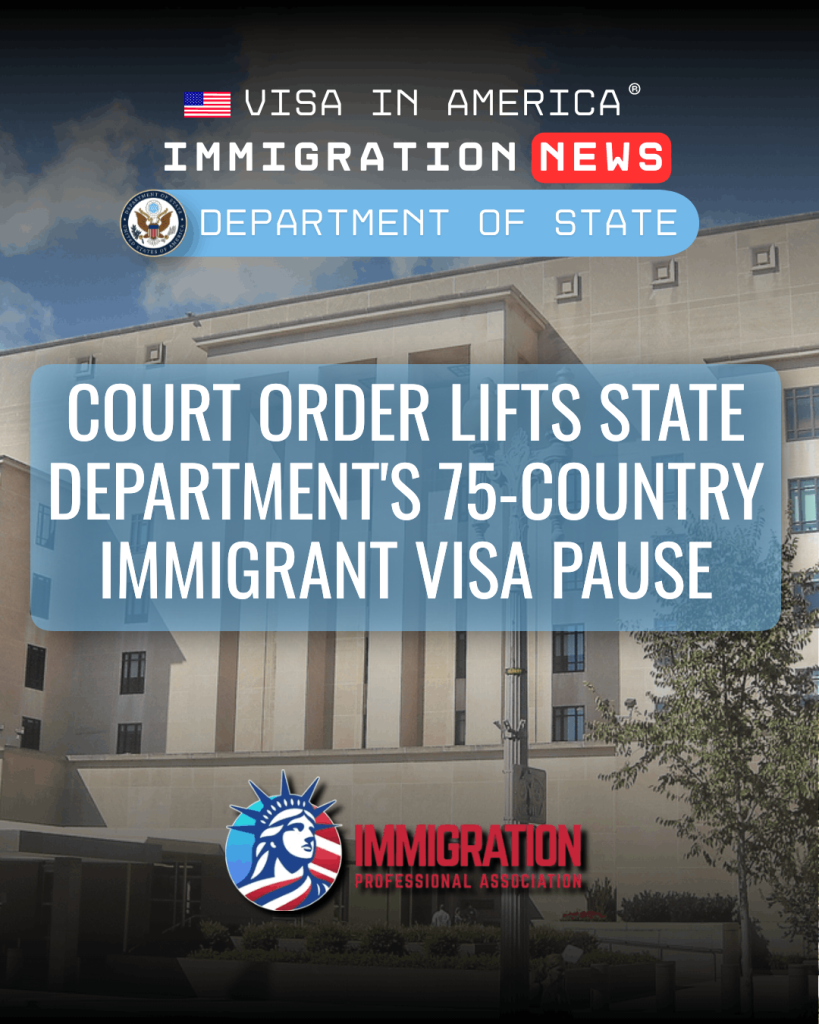
A federal court order has directed the U.S. Department of State to resume immigrant visa processing for nationals of approximately 75 countries. The government had placed these countries on administrative hold due to concerns about public benefits usage. The State Department had issued the original processing pause. It is now operating under a court order that undoes that pause. Many individuals from the affected countries have been waiting on immigrant visa interviews or final decisions. For them, this court-ordered restart of processing is an important step in an already complex landscape.
Background
Earlier in 2025, the State Department paused immigrant visa processing for nationals of roughly 75 countries it identified as showing high risk of public charge concerns. Specifically, these were countries where it judged a high share of nationals as likely to use public benefits after entry to the United States. The pause applied broadly to immigrant visa categories and affected applicants at U.S. consulates and embassies worldwide. That pause drew immediate legal challenges. Plaintiffs argued that the administrative hold went beyond the agency’s authority and unlawfully upset lawful immigration processes for tens of thousands of applicants in various stages of the visa pipeline.
What Is Changing
As a result of the court order, the State Department must lift the immigrant visa processing pause for nationals of the approximately 75 affected countries. The order directs the State Department to resume processing. This includes scheduling interviews, deciding pending applications, and issuing visas where applicants are otherwise eligible. This intervention by the court reflects a judicial decision that the administrative hold could not continue pending further review. The underlying legal dispute over the State Department’s authority to implement such a pause may still continue in the courts. So far, the State Department has not announced supplementary guidance on how it will operationalize the resumption at individual posts. Further administrative details may still be forthcoming.
Who Is Affected
The most directly affected individuals are immigrant visa applicants. They are nationals of the approximately 75 countries originally included in the State Department’s pause. This includes people waiting for consular interviews in family-based categories, such as immediate relatives of U.S. citizens and family preference categories. It also includes employment-based immigrants whose cases require consular processing abroad rather than adjustment of status within the United States. Diversity Visa lottery winners from affected countries who were waiting on scheduling or final decisions also fall into this group.
The pause also affected U.S. citizens and lawful permanent residents who filed immigrant visa petitions on behalf of relatives from affected countries. They have lived with long doubt about when their family members could complete the process. U.S. employers sponsoring foreign nationals for consular processing in the affected countries also have a stake. They need posts to resume normal operations quickly. Applicants already processing their cases through adjustment of status within the United States, rather than consular processing abroad, were generally not subject to the pause. They are not the primary focus of this court order.
Practical Implications
The court order bringing back processing is an important procedural step. Still, applicants and their families should approach next steps with realistic expectations about schedules. Consular posts that paused scheduling during the pause will need time to work through the backlog of cases that built up during the pause. Interview appointment slots at heavily affected posts may remain limited for weeks or months after operations officially resume. Applicants should not assume immediate scheduling.
For applicants whose cases were interview-ready prior to the pause, it is worth monitoring communications from the National Visa Center. Watch also for updates from the relevant U.S. embassy or consulate regarding changed appointments. Cases that paused mid-process may require different follow-up steps than cases waiting for initial scheduling. An example is a case where the consular officer conducted an interview but the consulate had not yet issued a visa.
Employers and HR professionals manage foreign national employees who experienced a break in their immigrant visa processing. They should review timelines for these employees’ expected start dates to begin employment or complete status changes. Where lawful status in the United States depends on timely immigrant visa issuing, these are not abstract scheduling questions. They have direct effects on work authorization continuation.
One open area is whether the State Department will issue specific operating guidance for consulates. This guidance would address ranking cases that were furthest along in processing before the pause. Available information does not yet reveal a specific framework for backlog management, and individual posts may handle case prioritization differently.
What to Watch For Next
Stakeholders should monitor the State Department’s official Visa News page for post-specific updates on interview scheduling resumption. They should also watch for any prioritization policies the agency implements. The underlying litigation that produced this court order may continue. This means the legal status of the State Department’s authority to impose such a pause remains unresolved. Further court proceedings, including any appeal by the government, could affect how durably this resumption holds. Applicants with cases at specific posts should watch for direct communications from the National Visa Center or the relevant consulate. They should not rely solely on general announcements. Observers expect additional judicial or agency developments as the litigation progresses.
How Immigration Professional Association Can Help
Immigration Professional Association has been closely tracking developments surrounding the State Department’s 75-country immigrant visa pause. We have also tracked the court order directing its reversal. Our team works regularly with families, employers, and individuals navigating consular processing. This includes cases that have experienced significant delays, scheduling disruptions, or mid-process administrative holds of the kind this pause created.
If you or a family member is a national of one of the affected countries and the pause halted your immigrant visa case, understanding where your case stands right now matters enormously. Knowing your status is the first step forward. Immigration Professional Association can help you assess the current status of your application. We can also identify any follow-up steps needed before your consulate resumes contact, and help you prepare for what comes next in the interview and adjudication process.
For employers managing employees who experienced a break in their consular processing, our team can help. We can evaluate the timeline implications for your workforce planning and work authorization considerations. We understand that immigration delays rarely happen in isolation — they ripple across employment arrangements, family plans, and financial decisions.
Has the immigrant visa processing pause affected you? If you want to understand what the court order means for your specific situation, we invite you to reach out to Immigration Professional Association. Our team is ready to discuss your case and help you move forward with clarity.