Introduction
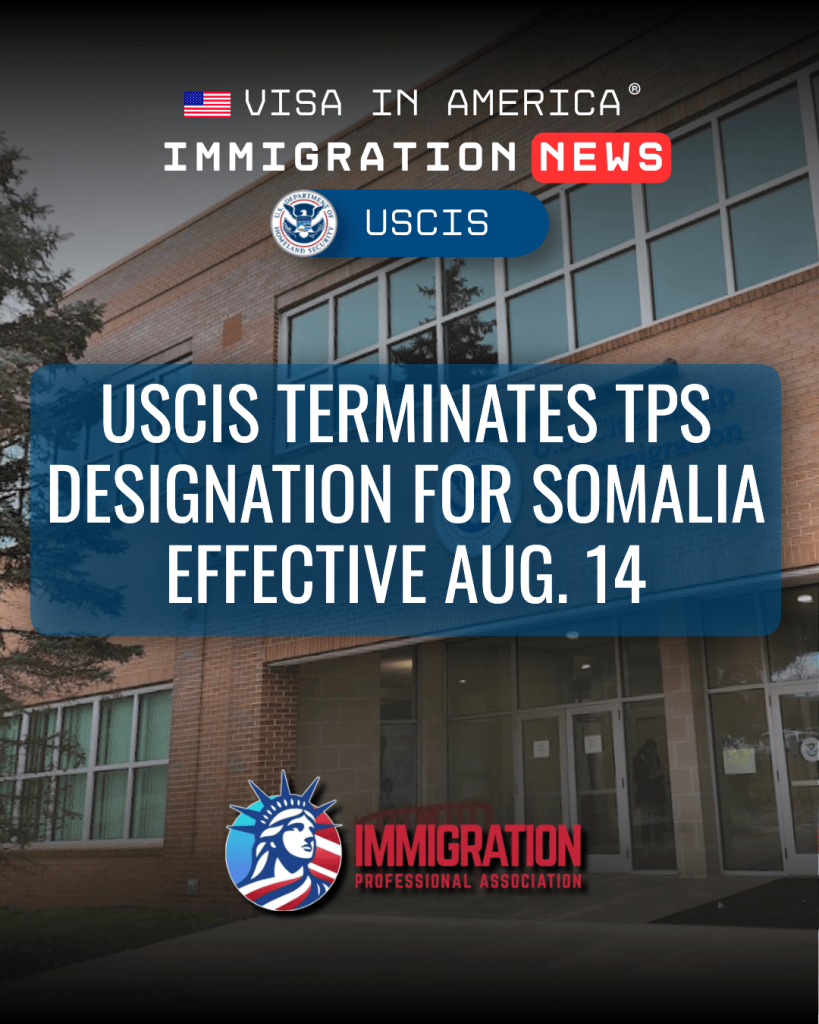
The Temporary Protected Status designation for Somalia has been formally terminated, effective August 14, 2026. U.S. Citizenship and Immigration Services announced the termination following a determination by former Secretary of Homeland Security Kristi Noem that Somalia no longer meets the legal conditions required to maintain a TPS designation. The termination carries immediate, concrete consequences for tens of thousands of Somali nationals currently living and working in the United States under this protection, including the immediate invalidation of work authorization documents tied to the designation.
Background
Temporary Protected Status is a humanitarian immigration benefit administered by the Department of Homeland Security that allows nationals of designated countries to live and work legally in the United States on a temporary basis when conditions in their home country, such as ongoing armed conflict, environmental disaster, or other extraordinary conditions, make safe return unrealistic. Somalia has held a TPS designation for decades, reflecting the country’s prolonged instability and humanitarian crisis. TPS doesn’t provide a path to permanent residence on its own, but it offers real protection from removal and lets beneficiaries obtain employment authorization while the designation remains in effect.
The legal process behind this termination began in January 2026, when DHS published a formal termination notice in the Federal Register at 91 Fed. Reg. 1547, dated January 14, 2026. That publication set the administrative groundwork for the status change. The termination was further supported by the U.S. Supreme Court’s June 25, 2026 ruling in Mullin v. Doe, 609 U.S. __ (2026), a decision the USCIS release describes as favorable to the government’s authority in similar TPS termination cases. The August 14, 2026 effective date marks the point at which the termination formally takes legal effect.
What Is Changing
The Somalia TPS designation is now terminated as of August 14, 2026. USCIS has made clear that Employment Authorization Documents bearing category codes A12 or C19 that were issued to Somali TPS beneficiaries are no longer valid as of that date. These EAD codes are specific to TPS holders, A12 applies to those granted TPS, and C19 applies to TPS applicants with pending cases, meaning any work authorization document tied to the Somalia TPS program is now legally void regardless of its printed expiration date.
The termination follows DHS’s review of country conditions and interagency consultation, through which the Secretary concluded that Somalia no longer satisfies the statutory criteria for designation. The Supreme Court’s decision in Mullin v. Doe appears to have resolved a key legal question surrounding the government’s authority to terminate TPS designations, removing a significant judicial obstacle to carrying out this and potentially other terminations.
Who Is Affected
Somali nationals who held TPS or had pending TPS applications under the Somalia designation are directly and immediately affected. Their protected status no longer exists as of August 14, 2026, and their TPS-based work authorization is void. Employers who currently employ Somali TPS holders are also directly affected: any I-9 employment eligibility verification that relied on a Somalia TPS-based EAD with category A12 or C19 must now be revisited, as those documents no longer constitute valid evidence of work authorization.
Individuals who may have derivative TPS status based on a Somali principal beneficiary are equally affected by the termination. Organizations that employ or serve Somali immigrant communities, whether in HR, social services, or legal assistance, will need to assess their affected populations and adjust their documentation and compliance practices right away.
Practical Implications
For Somali nationals currently in the United States, the termination creates an urgent need to evaluate all available immigration options. TPS status itself doesn’t confer any independent path to permanent residence, but many TPS holders may have separate avenues available, including pending or potential family-based petitions, employment-based sponsorship, asylum claims, or other humanitarian forms of relief. The termination of TPS doesn’t, by itself, determine a person’s overall immigration status or remove any independently held status or visa. Anyone relying solely on Somalia TPS protection should treat August 14, 2026, as an immediate action date.
From an employment compliance standpoint, U.S. employers should conduct an immediate audit of their I-9 records to identify any employees whose work authorization was documented using a Somalia TPS EAD with A12 or C19 coding. Continuing to employ individuals whose only valid work authorization was TPS-based would expose employers to liability under federal immigration law. Employers should work promptly with affected employees to determine whether alternative work authorization exists or can be established, and should document those efforts carefully.
A specific effective date has long been established in this case, August 14, 2026, which means the window for advance planning has now closed. For individuals who haven’t yet taken steps to assess alternative status options, the priority is acting quickly rather than waiting for additional guidance.
What to Watch For Next
Stakeholders should watch for whether any federal court litigation emerges challenging the Somalia TPS termination under the framework established or affected by Mullin v. Doe. Earlier TPS terminations for other countries faced significant legal challenges, some of which resulted in temporary injunctions that extended protections while cases were litigated. Whether similar challenges arise for Somalia, and whether courts grant relief, remains to be seen, and affected individuals shouldn’t assume litigation will restore their status.
Further guidance from USCIS on any transitional measures, deferred action policies, or related humanitarian discretion hasn’t been announced yet. Individuals and their representatives should watch the USCIS website closely for any supplemental guidance that may emerge after the August 14 effective date.
How Immigration Professional Association Can Help
The termination of Somalia TPS means the loss of legal status and work authorization for real people, often with deep community and family ties in the United States. Immigration Professional Association helps individuals navigate exactly these kinds of abrupt status changes: assessing what alternative immigration pathways may exist, filing emergency or time-sensitive applications, and developing a clear, realistic plan forward.
For Somali nationals now facing the loss of TPS protection, our team can review your individual immigration history, identify any family-based, employment-based, or humanitarian relief options that may be available to you, and help you understand what your situation actually requires.
For employers managing I-9 compliance after this termination, Immigration Professional Association can help conduct the necessary audits, advise on reverification obligations, and make sure your workforce documentation is legally defensible. The rules here are specific, and the stakes are real.
If you or someone you know held Somalia TPS status, or if your organization employs Somali TPS beneficiaries, contact Immigration Professional Association. The time to understand your options under the Somalia TPS termination is now, not after additional complications arise.