Introduction
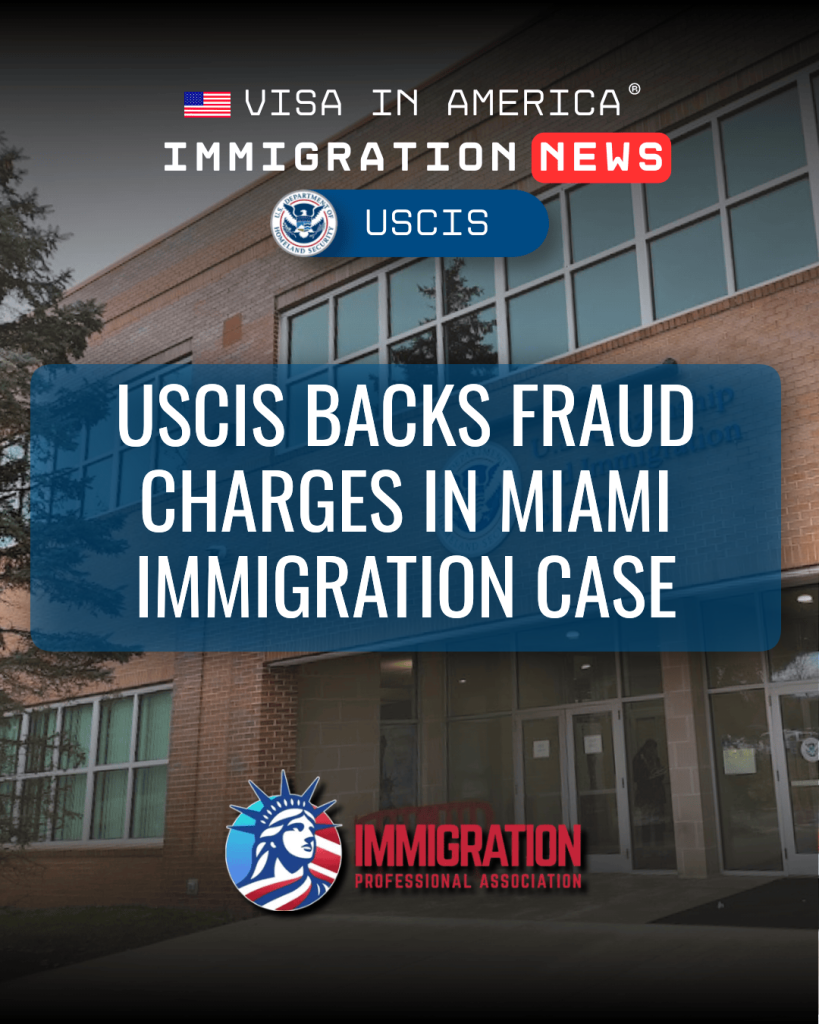
A Miami man now faces federal criminal charges for allegedly running a scheme to fraudulently certify naturalization applicants as medically disabled, a fraud designed to help others bypass the English language and civics requirements of the U.S. citizenship test. USCIS announced the charges against Eduardo Javier Ibarra Arrowsmith, 61, a Cuban national and convicted individual, as part of the agency’s broader effort to detect and dismantle Form N-648 disability exception fraud. The case shows how USCIS fraud detection capabilities are directly shaping federal criminal prosecutions, and why the integrity of the naturalization process remains an active enforcement priority.
Background
The Form N-648 and Naturalization Testing Requirements
Most naturalization applicants must demonstrate proficiency in English and pass a civics examination as conditions of becoming a U.S. citizen. Federal law provides a limited exception for applicants with medically established physical or developmental disabilities or mental impairments that prevent them from meeting those requirements. To claim the exception, an applicant must submit Form N-648, the Medical Certification for Disability Exceptions, signed and completed by a licensed medical professional, a physician or licensed clinical psychologist, who has examined the applicant and can attest to the qualifying disability.
The exception exists for a legitimate and important reason: it ensures that severe medical conditions do not become an insurmountable barrier to citizenship. When that exception is fraudulently obtained, however, it creates a gap in the naturalization vetting process and potentially allows individuals to gain citizenship without satisfying requirements that Congress has determined are important to that status.
What Is Changing
Federal Charges Filed in Connection with Alleged N-648 Fraud Scheme
Ibarra is not a licensed medical professional. Prosecutors allege he posed as one by impersonating a deceased Miami-Dade neurologist, using that doctor’s name, National Provider Identifier, and Florida medical license number to fraudulently complete and sign at least 34 Forms N-648 on behalf of naturalization applicants who were not his patients and whom he had no lawful authority to certify. According to the charges, 14 of those applicants went on to obtain U.S. citizenship without completing the required language and civics tests.
The charges against Ibarra include fraud and misuse of visas, permits, and other documents, as well as aggravated identity theft. His case was one component of the 2026 National Health Care Fraud Takedown, a coordinated federal enforcement action that resulted in charges against 455 defendants connected to more than $6.5 billion in alleged fraud targeting Medicare, Medicaid, the Federal Employees Health Benefit Program, and private insurers. The immigration fraud component of that broader takedown reflects how immigration-related schemes are increasingly prosecuted as part of multi-agency fraud enforcement operations.
The investigation originated inside USCIS. The agency’s Fraud Detection and National Security Directorate, commonly known as FDNS, identified Ibarra as the individual impersonating the deceased neurologist and referred the matter to Immigration and Customs Enforcement’s Homeland Security Investigations unit, which pursued the criminal case alongside prosecutors from the Southern District of Florida and the Department of Justice’s Health Care Fraud Unit.
Who Is Affected
The criminal case directly concerns Ibarra and the prosecution now proceeding in federal court. But the effects extend to several other groups.
Naturalization applicants who submitted legitimate Form N-648 certifications, the overwhelming majority of those who file disability exception claims, may notice more scrutiny applied to their documentation. Enforcement actions like this one frequently prompt heightened adjudication review of the forms that were subject to abuse, and USCIS now has clear incentive to verify the credentials of certifying providers going forward.
Medical professionals who sign Form N-648 certifications in good faith should be aware that their National Provider Identifier and license information are part of a system USCIS actively cross-references. Any discrepancy between the certifying provider’s credentials and official records creates a flag that can delay adjudication or trigger additional inquiry.
Applicants who obtained citizenship through fraudulently obtained N-648 exemptions may also face downstream legal consequences, since federal law provides mechanisms for denaturalization in cases where citizenship was procured by willful misrepresentation or concealment of a material fact, though that question is separate from the criminal case against Ibarra and isn’t addressed in the current charges.
Practical Implications
For naturalization applicants who genuinely qualify for a disability exception, the path forward remains open, but this case underscores the importance of working with a legitimate, currently licensed medical professional who has actually examined the applicant and can document that examination. USCIS has the technical capacity to verify provider credentials, including confirming that a National Provider Identifier belongs to a living, active practitioner licensed in the relevant state.
Applicants should ensure that the provider completing their N-648 is reachable, verifiable, and prepared to respond if USCIS contacts them directly. A certifying provider who cannot be confirmed through official records, or whose credentials belong to someone who has died or retired, will almost certainly trigger a request for evidence or a denial.
Immigration attorneys who assist clients with naturalization filings that include N-648 certifications would be well served by conducting their own due diligence on the certifying provider as part of case preparation. This is standard professional responsibility practice, but this enforcement action is a concrete reminder of why it matters.
For employers and HR teams whose international employees are moving toward naturalization, this case reinforces that disability exception filings warrant the same documentation discipline as any other benefit claim. Cutting corners on medical certification isn’t a planning strategy; it’s federal criminal exposure.
What to Watch For Next
The prosecution of Ibarra is proceeding in federal court in the Southern District of Florida. The current charges are allegations; no conviction has been entered. Stakeholders should watch the case for developments, including any plea proceedings or trial schedule.
More broadly, USCIS has signaled through its participation in the 2026 National Health Care Fraud Takedown that it views immigration benefit fraud as an active enforcement priority, not just an administrative backlog problem. Further referrals from FDNS to federal law enforcement are expected, and additional cases involving fraudulent N-648 certifications or credential impersonation may emerge as the agency continues its fraud detection work. Applicants and practitioners who work in the naturalization space should treat this as a signal that scrutiny in this area is elevated.
How Immigration Professional Association Can Help
Immigration Professional Association guides clients through the naturalization process, including cases where disability exceptions under Form N-648 are genuinely applicable. We understand the documentation standards USCIS applies to these filings, what adjudicators look for when verifying provider credentials, and how to structure a complete, defensible application that reflects the applicant’s actual circumstances.
If you or a family member is preparing for naturalization and has questions about whether a disability exception may apply to your situation, we can help you understand what the process involves, what medical evidence is necessary, and what to expect during adjudication. We can also review a pending application to ensure the supporting documentation meets USCIS standards before it is submitted.
This enforcement action is also a useful prompt for employers who sponsor employees on a path to permanent residence and eventual citizenship. If your HR team or legal department has questions about how cases like this one affect naturalization timelines or documentation requirements for employees in the pipeline, Immigration Professional Association is available to provide guidance specific to your workforce situation.
Reach out to Immigration Professional Association to discuss your naturalization matter, particularly if the N-648 disability exception process is part of your case. In an enforcement environment like this one, experienced immigration counsel can make a real difference.