Federal Indictment in New Jersey Highlights Risks of Misrepresentation on US Citizenship Application
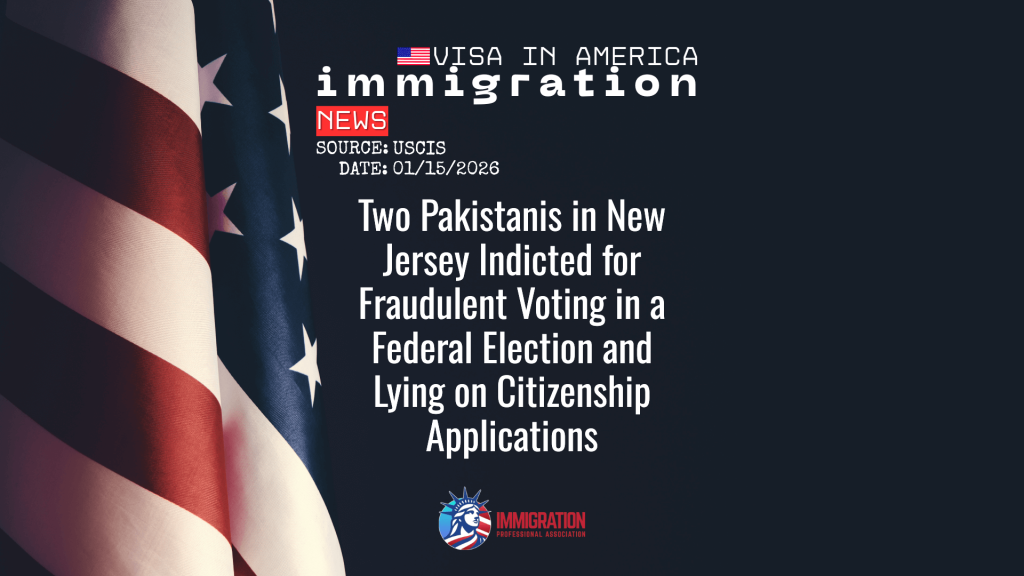
On January 15, 2026, U.S. Citizenship and Immigration Services (USCIS) announced that two Pakistani nationals residing in New Jersey were federally indicted for alleged fraudulent voting in a federal election. Moreover, they were indicted for misrepresentation during their naturalization applications. This case is a real-world example of how misrepresentation on a US citizenship application can lead to serious federal charges. This development serves as a significant reminder of the consequences associated with providing false information during immigration proceedings. In addition, it highlights the serious legal risks connected to unlawful voting as a non-citizen.
Background: Serious Consequences for Misrepresentation on US Citizenship Application
Federal law prohibits non-citizens from voting in federal elections. Also, falsely claiming U.S. citizenship or participating in restricted activities can result in criminal charges, denial of immigration benefits, and long-term bans on reentry. In particular, applicants should remember that any misrepresentation on US citizenship application forms—especially in matters tied to federal elections—may have lasting criminal or immigration consequences. According to the official announcement, the charges stem from the individuals’ alleged participation in a federal election while ineligible. Furthermore, there was a subsequent failure to disclose accurate information about this conduct during the process of applying for U.S. citizenship. USCIS noted its close cooperation with federal law enforcement agencies to investigate and prosecute such violations.
Key Compliance Implications for Naturalization Applicants
This case underscores how thoroughly USCIS examines naturalization applications for complete and truthful disclosure. Misrepresentation, especially on a US citizenship application, can have significant consequences for eligibility. Omitting relevant facts or misrepresenting information, even if not intended to deceive, can have significant ramifications. Applications for citizenship require a full account of past actions, especially regarding voter registration and election participation. This is important since non-citizen voting constitutes both a federal criminal offense and a ground of ineligibility for naturalization. USCIS consistently reviews these areas. In addition, it uses information sharing with other agencies and advanced screening systems to detect inconsistencies or violations.
Impact on Applicants, Employers, and Legal Representatives
Individuals pursuing naturalization or other immigration benefits should be aware of the heightened scrutiny regarding claims of U.S. citizenship and electoral involvement. For both employers and applicants, understanding how misrepresentation on the United States citizenship application might impact legal status is crucial. Employers, HR professionals, and attorneys assisting foreign nationals are reminded of the importance of ensuring that applicants understand the legal prohibitions and disclosure requirements associated with voter registration and election participation. Even inadvertent errors can result in the denial of immigration benefits or referral for federal investigation. This risk is clearly illustrated by the indictment in this case.
For additional details and official statements, refer to the announcement by USCIS published on January 15, 2026.