Lying on N-400 About Voting: The Tampa Case
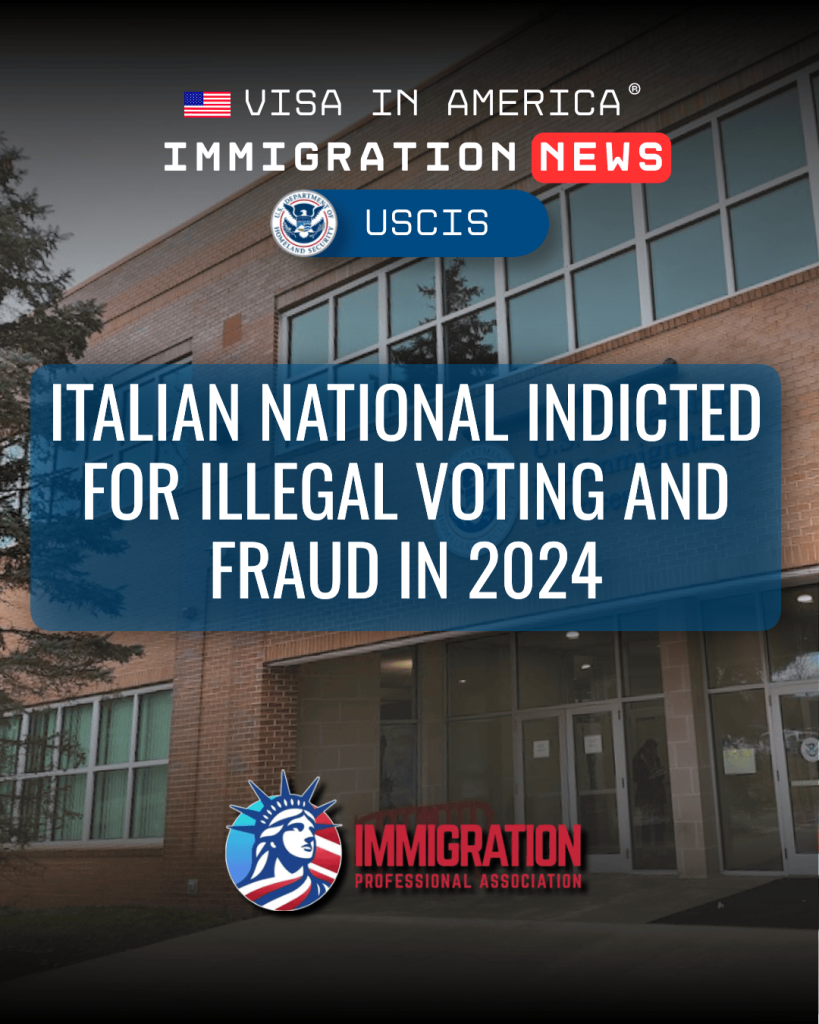
A federal indictment unsealed in Tampa, Florida charges Andrea Catanese, a 60-year-old Italian national. It alleges he voted in the 2024 general election as a non-citizen. He then allegedly engaged in lying on N-400, the naturalization application, about having done so. The case involved a criminal referral supported by U.S. Citizenship and Immigration Services. It illustrates how illegal voting by an alien can carry consequences well beyond the ballot box. What some may view as an administrative misstep becomes a serious federal criminal matter.
Background: Voting Bans and the N-400 Question
Federal law prohibits non-citizens from voting in federal elections. That prohibition is not agency policy or regulation. It is a federal statute, and violations carry criminal penalties. Separately, naturalization requires applicants to answer extensive questions about their history. These include whether they have ever voted in a U.S. federal election. The Form N-400, Application for Naturalization, asks this question directly, and USCIS officers review the answers during in-person interviews. False statements made during that process are a separate federal offense. This applies whether they appear on the form or are made verbally to an officer.
USCIS routinely participates in enforcement actions related to immigration fraud and naturalization integrity. The agency operates coordination channels with Homeland Security Investigations and other federal law enforcement bodies. It also maintains a public tip form for reporting suspected benefit fraud.
What the Indictment Alleges About Lying on N-400
This case does not represent a change in law or policy. Rather, it is an enforcement action. It shows how authorities apply existing statutes when an alleged violation touches both the electoral process and the naturalization system.
According to the indictment, Catanese cast a ballot in the November 2024 general election despite being an Italian national without U.S. citizenship. The indictment further alleges that Catanese later filed a Form N-400. It says he stated on that application that he had never voted in a federal election. When a USCIS officer reviewed the application and questioned him, Catanese allegedly repeated that false statement in person. Federal prosecutors have charged him with three distinct offenses: voting by an alien, attempting to unlawfully procure naturalization, and making a false statement in connection with naturalization. If convicted on all counts, he faces a maximum of 10 years in federal prison.
HSI led the investigation with assistance from USCIS and the Pasco County Supervisor of Elections. As with all indictments, the charges are formal allegations. The law presumes Catanese innocent unless and until the government proves him guilty.
Who Is Affected
This case is directly relevant to any non-citizen living in the United States who is currently eligible to vote in any jurisdiction, who has voted in any election, or who is considering filing a Form N-400, or has already filed one. It is particularly instructive for lawful permanent residents. They are often long-term U.S. residents, deeply integrated into their communities. They may have encountered voter registration materials through routine interactions with government agencies or civic organizations.
This case indirectly affects employers and HR professionals. It reinforces the seriousness of status-related compliance for foreign national employees, particularly those approaching eligibility for naturalization. The case directly implicates immigration attorneys. They may need to counsel clients on what prior conduct could affect a pending or future naturalization application.
The case does not affect U.S. citizens, applicants who have never voted in a federal election, or individuals whose naturalization applications do not raise these issues.
Why Lying on N-400 Compounds the Legal Risk
The compounding nature of the alleged conduct in this case is worth examining carefully. Voting as a non-citizen is a federal crime on its own. But the more significant legal exposure appears to stem from what allegedly happened afterward. That was the submission of a naturalization application containing a false answer to a direct question about prior voting conduct. It was followed by the repetition of that false statement to a federal officer during an interview.
Some people have voted in a U.S. election while not yet a citizen, due to a misunderstanding about eligibility, misinformation from a third party, or a registration error. For them, this case makes clear that filing a naturalization application and answering that question untruthfully creates a separate and compounding federal crime. The question on the N-400 is not a formality, and USCIS trains its officers to probe answers during interviews.
Lawful permanent residents preparing to file for naturalization may be unsure about past voting conduct in any federal, state, or local election. They should address that issue squarely, with legal guidance, before submitting an application. As this case illustrates, filing with an inaccurate answer carries significantly more serious consequences than the underlying act alone.
Separately, this case reminds us that USCIS actively collaborates with law enforcement in fraud investigations. Those agencies include HSI and local election authorities. Investigators can cross-reference information from voter rolls with immigration records.
What to Watch For Next
This case will proceed through the federal criminal court system in the Middle District of Florida. The source material does not publicly announce a trial date, and outcomes in criminal proceedings are inherently uncertain. The case itself does not create new law. But stakeholders in the naturalization community (applicants, practitioners, and advocacy organizations) should monitor it. Developments may signal how aggressively federal prosecutors pursue similar conduct going forward. USCIS has encouraged the public to report suspected immigration benefit fraud using its official tip form.
How Immigration Professional Association Can Help
Naturalization marks one of the most consequential milestones in an immigrant’s life. The N-400 ranks among the applications that USCIS scrutinizes most closely. At Immigration Professional Association, we work closely with permanent residents preparing to file for naturalization. A significant part of that work involves helping clients understand the full weight of every question on the application before they submit it.
Are you a lawful permanent resident with questions about your eligibility for naturalization? Do you have any concern about how prior conduct (including questions about past elections or civic participation) might affect your application? We encourage you to speak with our team before filing. The guidance you receive at this stage can shape the trajectory of the entire process.
Reach out to Immigration Professional Association to schedule a consultation focused specifically on your naturalization eligibility and the integrity of your N-400 submission. This is not a step where general information is enough. It is not a step to take without experienced guidance.