Wage Calculations H-1B: Proposed Revisions by Department of Labor
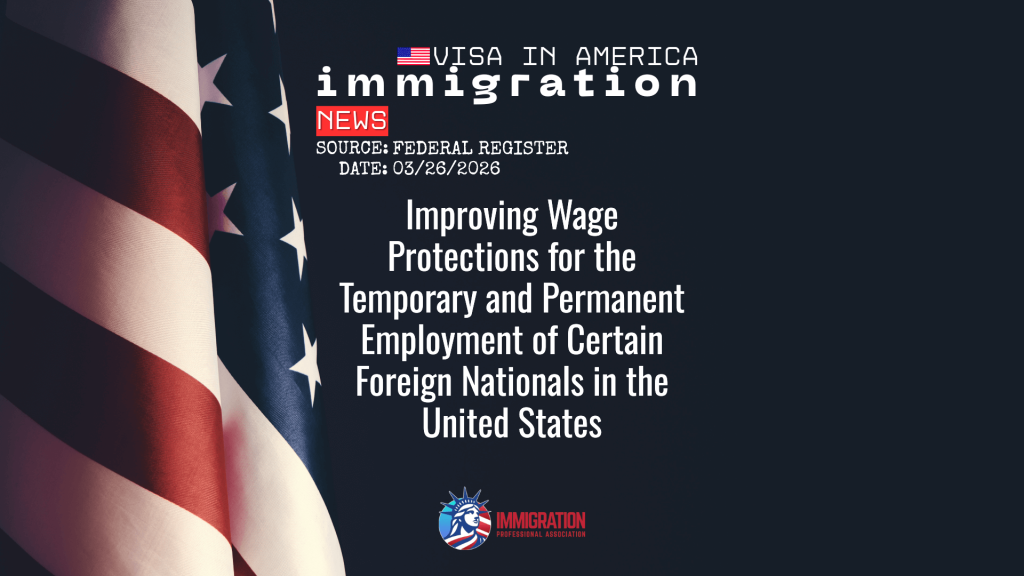
On March 4, 2026, the U.S. Department of Labor (DOL) issued a Notice of Proposed Rulemaking titled “Improving Wage Protections for the Temporary and Permanent Employment of Certain Foreign Nationals in the United States.” The proposal revises prevailing wage calculations for H-1B, H-1B1, E-3 LCAs, and PERM labor certifications.
Proposed revisions recalibrate the four-tiered wage structure from Bureau of Labor Statistics’ OEWS data. The goal is aligning foreign workers’ wages with U.S. workers’ wages, enhancing program integrity.
Because this is a proposed rule, no immediate changes are in effect. Understanding how potential modifications could influence wage compliance obligations and long-term workforce planning is important for employers and sponsored professionals.
Understanding Wage Calculations H-1B: The Four-Tiered Structure
Under current regulations, the authority bases prevailing wages for H-1B, H-1B1, and E-3 petitions on a four-level wage framework that reflects job complexity, experience, and supervision. The higher of prevailing or actual wages must be paid by employers to similarly employed company workers.
A prevailing wage determination from DOL must be obtained by employers before mandatory recruitment in PERM certification. The authority establishes that prevailing wage as the minimum salary that employers must offer to the foreign worker if they approve permanent residence.
The authority would modify how they calculate the four wage levels using OEWS data under the proposed rule. While DOL has indicated that the intent is to strengthen wage protections and reduce perceived incentives to hire foreign workers at lower wage tiers, the operational effect may be a recalibration of wage assignments across occupations and geographic areas.
Potential Impact on Employers Sponsoring H-1B and PERM Workers
If finalized in its current or a similar form, the changes may result in upward adjustments to certain prevailing wage determinations. For employers, this could directly affect compensation budgets tied to new H-1B, H-1B1, E-3, and PERM filings.
Organizations filing LCAs may need detailed reviews of position requirements and salary benchmarking. Employers may face changes in minimum salary for sponsored workers, affecting recruitment and case decisions.
The revised methodology could also affect long-term workforce planning. Employers may need to assess if projected wage thresholds match internal compensation for green card sponsorship. Adjustments to methodology can have ripple effects across multi-year immigration strategies.
Compliance and Documentation Considerations
Wage compliance is central to both temporary and permanent employment-based immigration programs. For H-1B, H-1B1, E-3 petitions, employers must maintain accurate Public Access Files and wage documentation. Officials must ensure that wage determinations and recruitment show no qualified U.S. workers are displaced or underpaid in PERM.
Employers may need to reassess how they classify and document roles internally due to a revised wage calculation system. HR teams and immigration counsel must ensure job descriptions and salaries align with updated wage frameworks.
Careful documentation and consistency between immigration filings and internal job classifications remain essential, particularly in the event of audits or requests for additional information.
What Sponsored Professionals Should Monitor
Foreign professionals in H-1B, H-1B1, E-3, or PERM-based green card processes may experience indirect effects if prevailing wages shift. Higher prevailing wage requirements could influence employer decisions regarding sponsorship timing, role assignments, or long-term immigration planning.
Prevailing wage adjustments could impact minimum salaries in future PERM filings for early-stage workers. Employees might see changes in position categorization and compensation due to regulatory updates.
At this stage, sponsored workers do not need to take any immediate action. The court subjects the proposal to public comment and further review before issuing any final regulation.
Regulatory Timeline and Next Steps
The authority currently opens the Notice of Proposed Rulemaking to stakeholder comment in accordance with federal rulemaking procedures. DOL will review submitted comments before determining whether to issue a final rule and, if so, in what form.
Until the court publishes a final rule and announces effective dates, existing prevailing wage calculation rules remain in place. Employers using H-1B, H-1B1, E-3, and PERM programs should review wage compliance and monitor developments.
The review expects further clarity on implementation timelines and computational changes as rulemaking advances.