Introduction
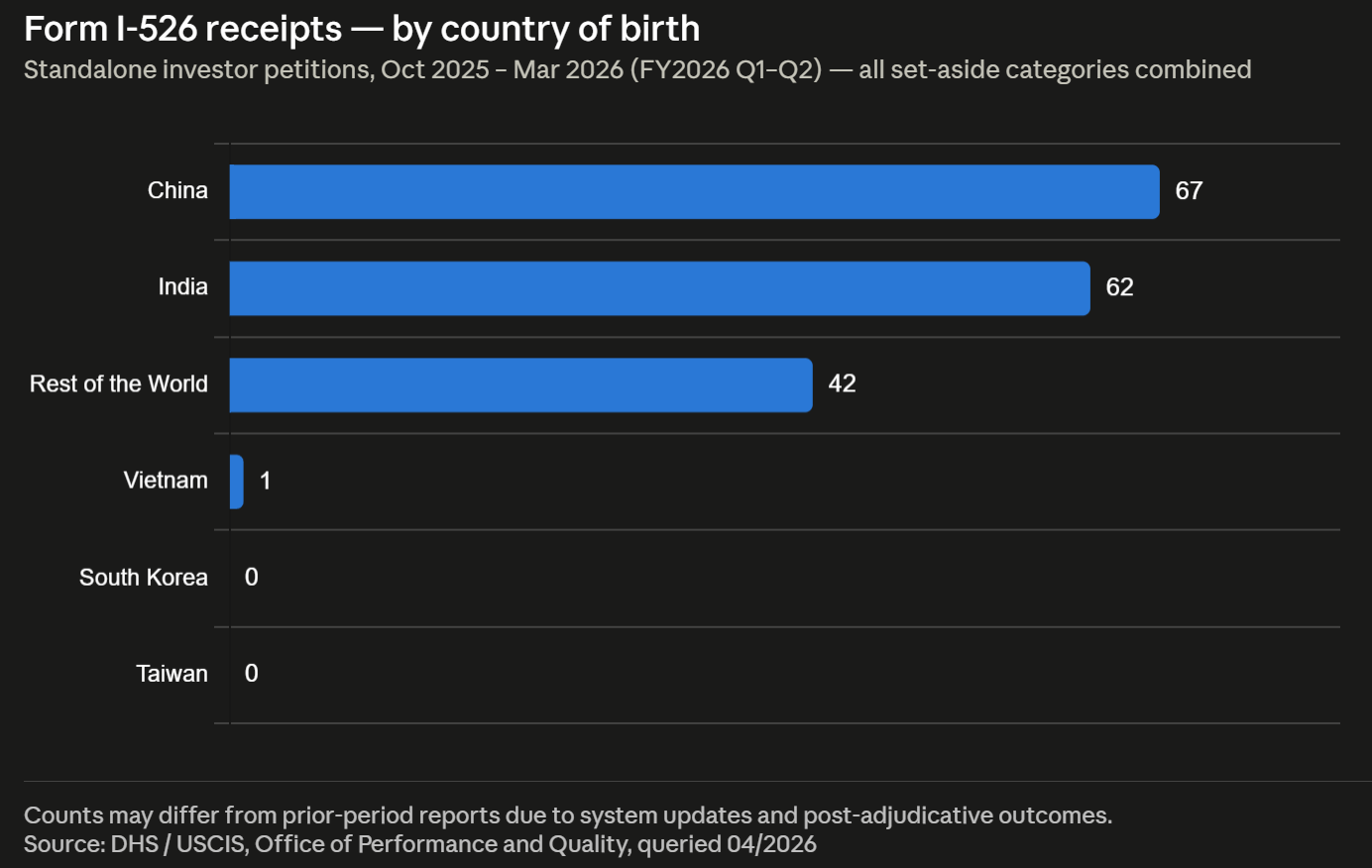
USCIS released its Form I-526 receipt data for the first two quarters of Fiscal Year 2026, covering October 2025 through March 2026, and the numbers tell a clear story about who is actively pursuing the standalone EB-5 investor visa pathway. China-born investors accounted for the largest share of I-526 filings during this period, generating 67 total receipts out of 172 recorded across all countries of birth. For immigration practitioners, employers, and high-net-worth individuals considering the EB-5 standalone route, this quarterly I-526 receipt breakdown offers a ground-level view of program activity and demand by investment category.
Background
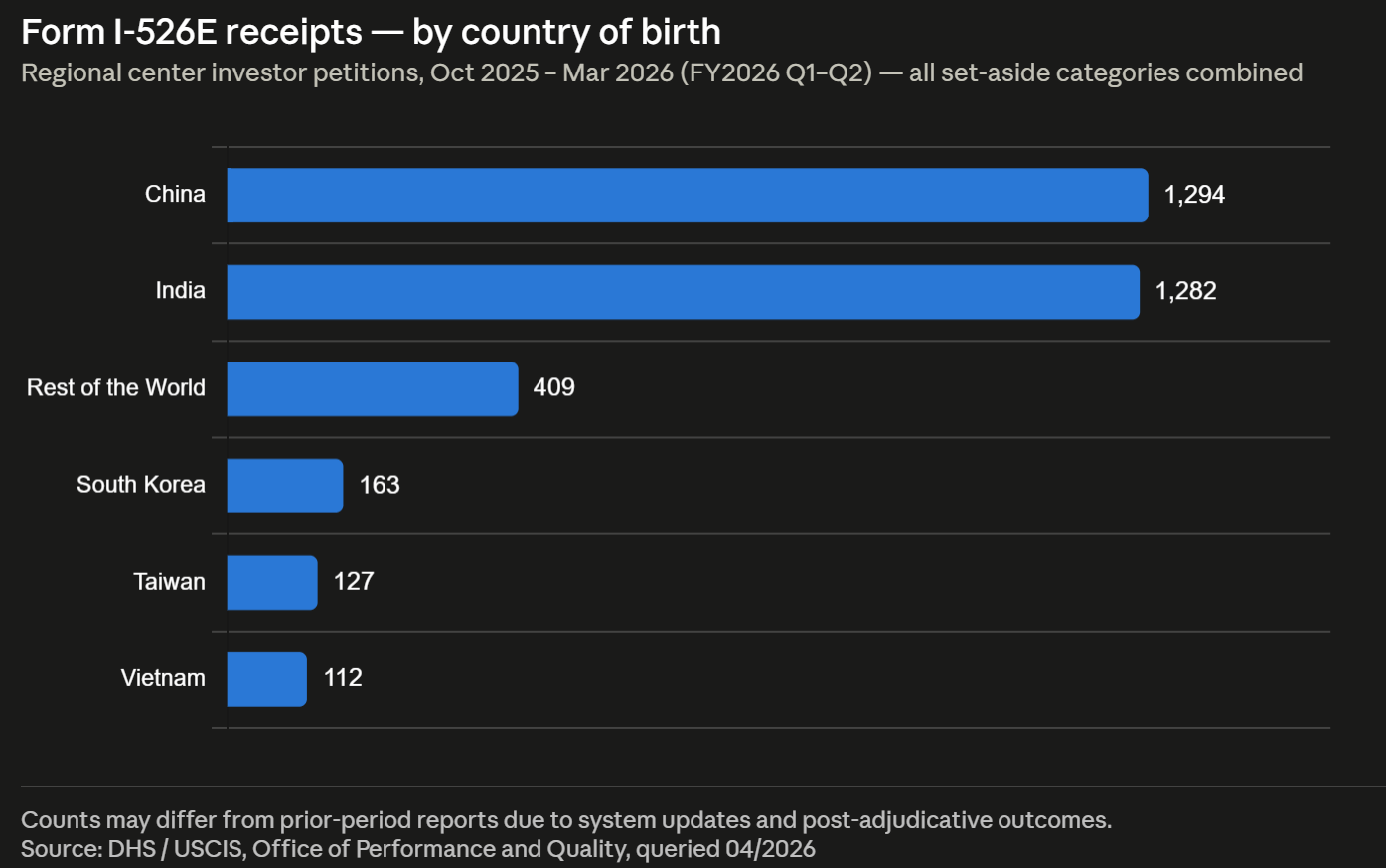
The Form I-526, formally titled the Immigrant Petition by Standalone Investor, is the first major step an EB-5 investor takes when pursuing a green card through direct investment rather than through a USCIS-designated regional center. A parallel form, the I-526E, covers regional center investors, but this dataset focuses exclusively on the standalone pathway. Under the EB-5 program, standalone investors must deploy capital directly into a new commercial enterprise they actively manage, meet minimum investment thresholds, and demonstrate that the investment will create at least ten full-time jobs for qualifying U.S. workers.
The EB-5 Reform and Integrity Act of 2022 restructured the program significantly, introducing new set-aside visa categories — rural areas, high unemployment areas, and infrastructure projects — alongside a traditional unreserved category. These distinctions matter because they determine not only where investment capital must flow, but also where applicants fall in the visa queue, which directly affects wait times for investors from high-demand countries.
What Is Changing
This release is not a regulatory change — it is a quarterly statistical report published by USCIS’s Office of Performance and Quality, reflecting the most current data available as of April 2026. The report tracks I-526 receipts by investment type and country of birth for each month in Fiscal Year 2026.
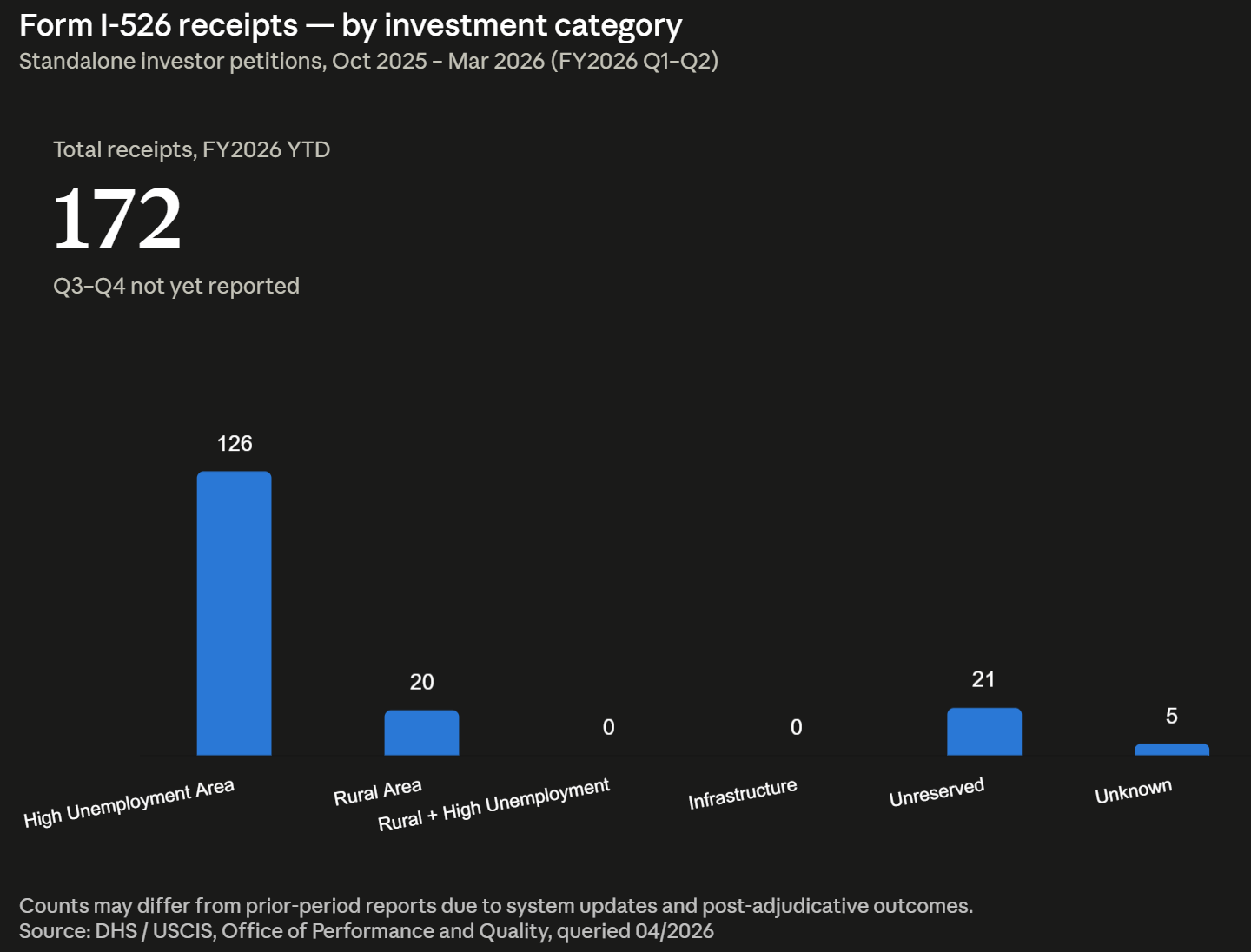
Through the first two quarters, USCIS received 172 standalone I-526 petitions in total. The high unemployment area set-aside drew the most activity, accounting for 126 of those filings. Rural area investments generated 20 receipts, while the unreserved category produced 21. The infrastructure set-aside recorded zero receipts across all tracked countries during this period. Five filings fell under an unknown investment category. USCIS notes that counts in this report may shift in future releases due to system updates and post-adjudicative outcomes.
Who Is Affected
Investors born in China represent the most active group in the standalone EB-5 space during this period, with 67 total I-526 receipts — the majority of which, 58, were directed toward high unemployment area projects. India-born investors filed 61 petitions in total, with the largest concentration also in high unemployment area investments at 49 filings. Investors categorized under “Rest of the World” contributed 42 filings, most of which fell into the unreserved or high unemployment area categories.
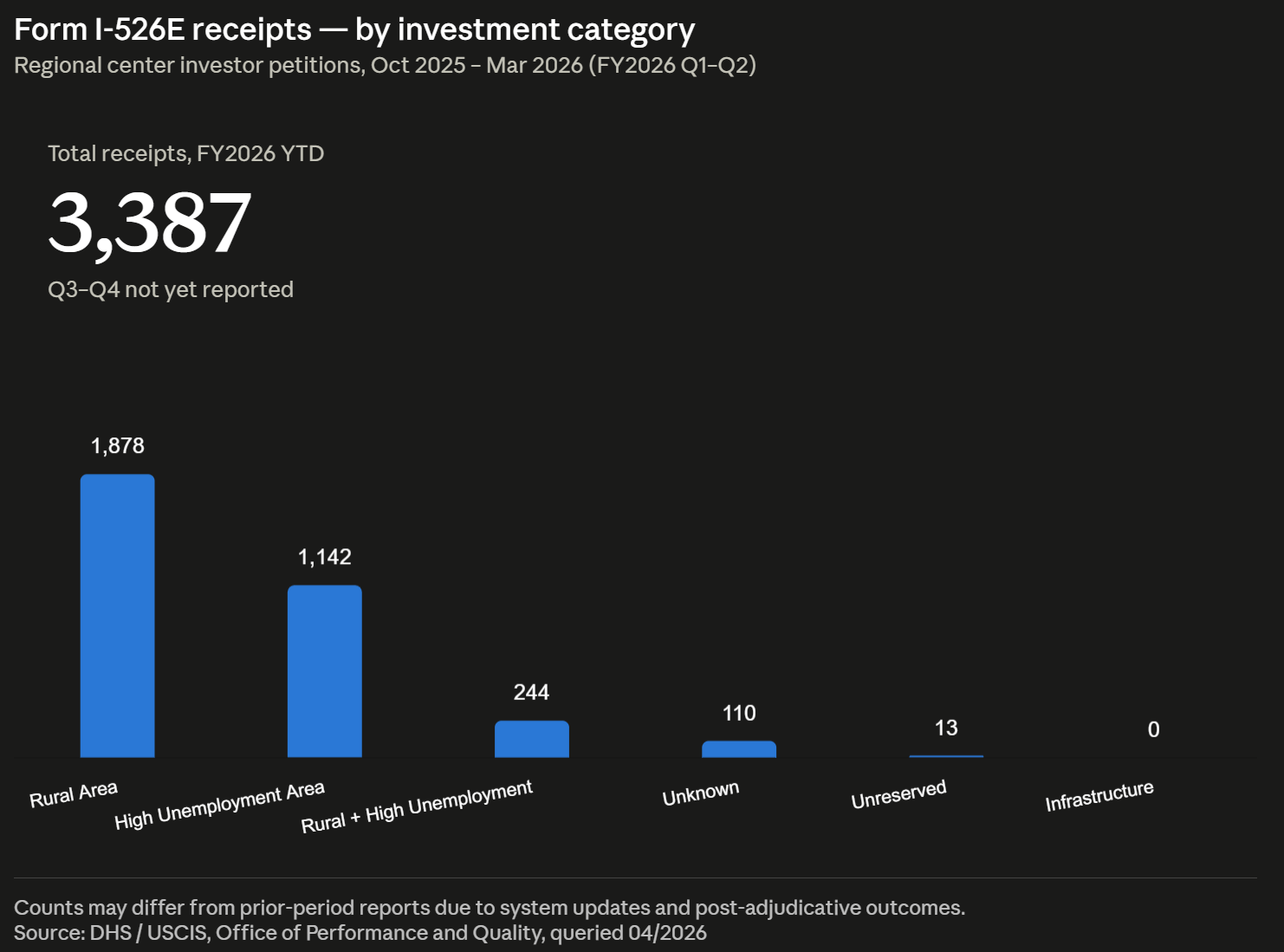
South Korea, Taiwan, and Vietnam — countries historically active in EB-5 — recorded no standalone I-526 receipts during either quarter. This may reflect a continued preference among investors from those countries for the regional center pathway, which involves I-526E petitions tracked in a separate dataset not covered here. Investors from all countries who are considering the standalone route, and particularly those born in oversubscribed countries like China and India, are the population most directly implicated by these filing trends.
Practical Implications
The concentration of filings in the high unemployment area category reflects a rational strategic choice by investors. Targeting a qualifying high unemployment area preserves access to the congressional set-aside for that category, which carries a reserved allocation of EB-5 visas. For investors born in countries facing visa backlogs — most significantly China and India — investing in a set-aside category is often the only mechanism available to avoid indefinite waiting periods in the unreserved pool.
The complete absence of infrastructure filings is notable. The infrastructure set-aside was introduced by the 2022 reform legislation and is available for projects involving government-owned or government-operated infrastructure. Its zero-receipt standing in this dataset suggests that either qualifying projects are not yet reaching the market at scale through the standalone pathway, or investors have not yet broadly engaged with that category. Practitioners advising clients on project selection should factor this into their analysis of available options.
The relatively modest overall volume — 172 filings across six months — also signals that the standalone EB-5 market remains a specialized channel. Unlike the regional center program, which historically attracted far higher petition volumes, the standalone pathway demands active management by the investor and a more hands-on business structure. The data reflects that dynamic, and applicants should calibrate their expectations for USCIS processing timelines accordingly, particularly given that receipt volumes can influence agency staffing and adjudication pace over time.
For China and India-born investors specifically, country of birth retains critical significance in EB-5 planning even after the 2022 reforms. Visa availability in oversubscribed countries is determined not just by petition approval but by movement in the Department of State’s Visa Bulletin, which is updated monthly. Strategic investment category selection — set-aside versus unreserved — can meaningfully affect how long an approved petition remains in the queue before a visa number becomes available.
What to Watch For Next
USCIS publishes this data quarterly, and the next release covering Q3 (April through June 2026) will provide the first look at whether filing volumes are accelerating as the fiscal year progresses. Stakeholders should monitor whether the infrastructure category begins generating receipts, which would signal growing awareness and project availability in that set-aside. The Department of State’s monthly Visa Bulletin remains equally important to watch for investors from China and India, as shifts in cut-off dates directly affect the practical utility of investment category decisions made at the petition stage.
How Immigration Professional Association Can Help
Immigration Professional Association works regularly with investors, entrepreneurs, and their families who are navigating the EB-5 standalone pathway from the initial investment structure through petition preparation and ultimately to adjustment of status or consular processing. The data released this quarter reinforces what our team sees in practice: investment category selection is not a formality — it is one of the most consequential decisions a standalone investor makes, with direct implications for visa availability timelines and compliance with USCIS’s evolving set-aside framework.
For investors born in China or India who are weighing whether the standalone route fits their circumstances, or for those already holding an approved petition and trying to understand what current Visa Bulletin trends mean for their timeline, our team can help translate program mechanics into a clear picture of what comes next. If you are exploring an EB-5 standalone investment or have questions about how this quarter’s data affects your specific planning, we invite you to reach out to Immigration Professional Association for a substantive conversation about your options.