Introduction
USCIS reported 660,692 pending N-400 naturalization applications at the close of the second quarter of fiscal year 2026, covering the period from January 1 through March 31, 2026. The agency received 140,767 new applications during the quarter while approving 83,459 and denying 15,022, leaving a backlog that signals significant processing pressure at field offices nationwide. For the hundreds of thousands of lawful permanent residents waiting to become U.S. citizens, understanding the N-400 application backlog — its size, geographic distribution, and practical implications — is essential for planning next steps with confidence.
Background
Form N-400 is the application an eligible lawful permanent resident files to become a naturalized U.S. citizen. Applicants generally must demonstrate continuous residence, physical presence, good moral character, English proficiency, and knowledge of U.S. history and civics, among other requirements. Once filed, an application passes through initial review, biometrics scheduling, an interview at the applicant’s assigned USCIS field office, and finally an approval, denial, or continuance determination. Because each stage is handled locally, processing times and pending volumes vary considerably from one field office to another. USCIS publishes quarterly performance data broken down by field office location, allowing applicants and practitioners to track how their regional office compares to the national picture.
What Is Changing
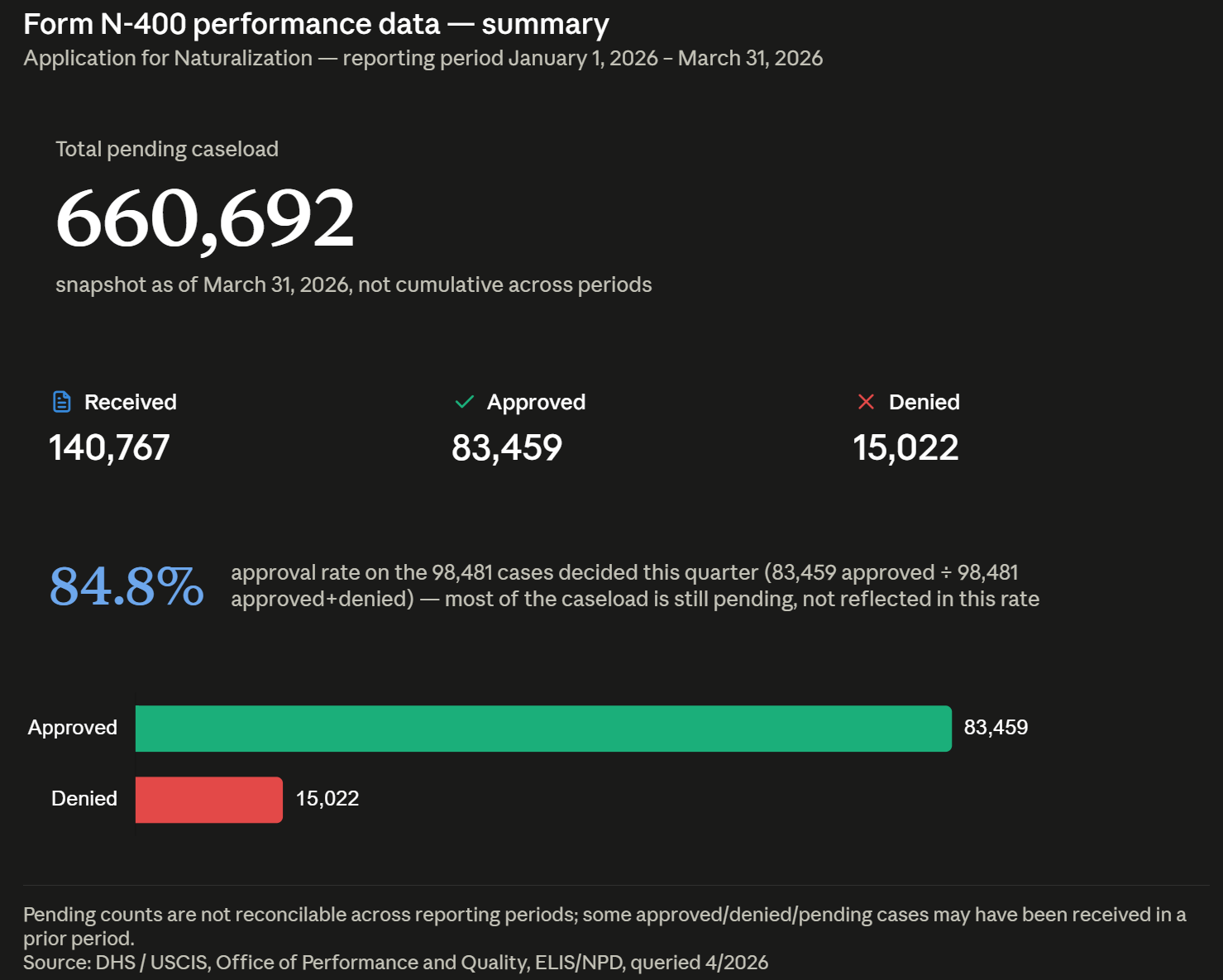
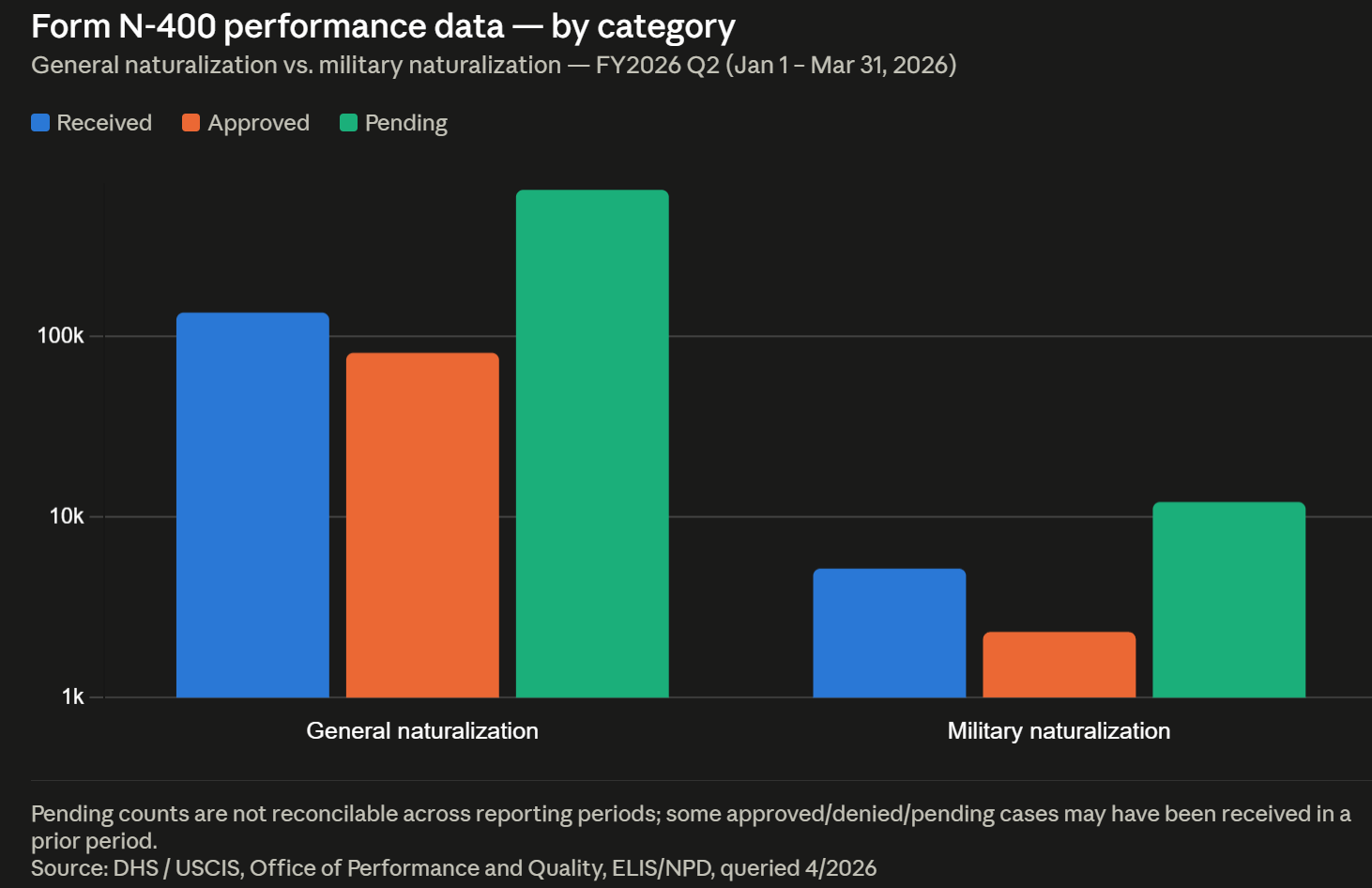
The Q2 FY2026 data released by USCIS reflects a snapshot — not a policy change — but the numbers tell a meaningful story about where the system stands today. Of the 660,692 total pending applications as of March 31, 2026, the vast majority (648,583) fall under the standard naturalization category, while 12,109 involve military naturalization, which applies to applicants whose eligibility is based on service in the U.S. armed forces.
Receipts outpaced approvals during the quarter: the agency took in 140,767 applications while completing 83,459 approvals and 15,022 denials — a combined output of 98,481 decisions against a much higher intake volume. That gap explains why the pending count remains so large. The data represents the most current figures available at the time USCIS queried its systems in April 2026, and the agency notes that pending counts cannot be precisely reconstructed from prior quarters because administrative closures and inter-office transfers are not reflected in this report.
Who Is Affected
Every lawful permanent resident who has filed or is preparing to file an N-400 is directly affected by these numbers, because pending volume is the primary driver of how long an applicant waits between filing and interview scheduling. Spouses of U.S. citizens who filed under the reduced three-year residence requirement, applicants who have been waiting across multiple quarters, and military service members pursuing expedited naturalization under separate statutory provisions each sit within this 660,692-case queue.
Employers and HR teams that track the citizenship timeline for employees — particularly those in roles requiring a U.S. citizenship clearance — face indirect effects when backlogs extend the period before an employee can satisfy that requirement. Immigration attorneys and accredited representatives whose clients have pending N-400 applications are also affected, since caseload data by office directly informs how they counsel clients on realistic timelines.
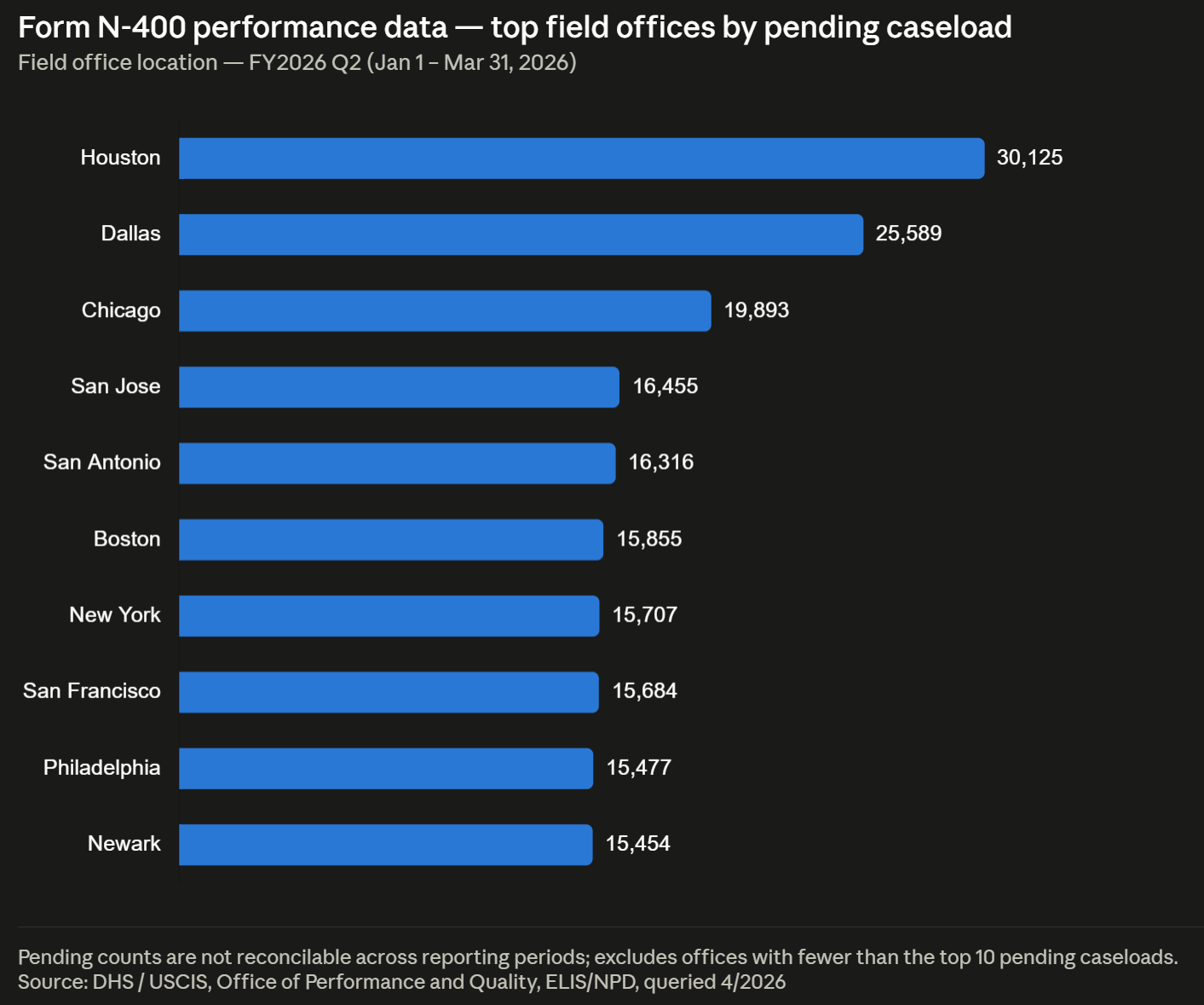
Applicants whose cases are pending at offices with very large queues — such as Houston (30,125 pending), Dallas (25,589), San Jose (16,455), San Francisco (15,684), Boston (15,855), Newark (15,454), Philadelphia (15,477), New York City (15,707), and Sacramento (13,961) — face the longest expected waits in absolute terms. Conversely, offices in smaller states carry far smaller backlogs, though those figures reflect both lower demand and jurisdiction size.
Military naturalization applicants represent a distinct category. Offices such as San Antonio (1,189 pending military cases), Greer, South Carolina (1,067), Kansas City (727), and Norfolk (782) show notably higher military pending counts, reflecting the presence of nearby military installations within those offices’ jurisdictions.
Practical Implications
The core takeaway from this data is that the national N-400 backlog has not materially resolved — roughly eight times more applications are pending than are decided in a single quarter at the current approval rate. Applicants should not interpret a lack of communication from USCIS as a problem unique to their case; extended wait times are systemic and reflected across virtually every field office in this report.
For applicants who have been waiting longer than the published processing time for their specific field office, USCIS policy generally permits an online case inquiry or an InfoPass appointment once that threshold has passed. Knowing your local office’s pending volume — and comparing it to the national median — gives context for when to escalate and when to wait. The data also confirms that offices processing both standard and military cases simultaneously carry compounded backlogs, a factor relevant to veterans and active-duty service members planning their naturalization timeline.
One area of particular note: applicants planning for naturalization-dependent events — international travel, federal employment with citizenship requirements, or voter registration deadlines — should build in substantial lead time and consult with a qualified practitioner before assuming a specific completion date. The quarterly data does not include a projected clearance timeline, and USCIS has not announced any specific initiative to reduce the N-400 backlog referenced in this dataset.
Additionally, the data carries a disclosure limitation worth noting. Many individual office figures are suppressed (marked “D”) where counts fall below USCIS disclosure thresholds for denial categories, meaning the true denial rate at some offices may be higher or lower than the published figures suggest. Applicants at offices with suppressed denial data should not assume a denial-free environment.
What to Watch For Next
USCIS releases N-400 performance data on a quarterly basis, so the next update — covering Q3 FY2026, from April through June 2026 — is expected later in 2026 and will indicate whether the pending volume is rising, stabilizing, or contracting. Stakeholders monitoring naturalization wait times should also watch for any USCIS operational announcements regarding staffing changes, interview scheduling reforms, or fee schedule updates that could affect throughput at field offices. No specific policy change directly tied to this data release has been announced, and a specific timeline for backlog reduction has not yet been stated by the agency.
How Immigration Professional Association Can Help
Navigating a naturalization application while nearly three-quarters of a million other cases are in the same queue requires more than patience — it requires strategy. Immigration Professional Association works with lawful permanent residents preparing to file N-400 applications, helping ensure that submissions are complete, supporting documentation is organized, and interview preparation is thorough. For clients already waiting, our team can assess whether a case inquiry, an attorney-assisted follow-up, or a different procedural step is appropriate given the specific field office involved and how long the application has been pending.
We also assist military service members and their families with naturalization matters, including the documentation requirements that differ from standard civilian applications — a distinction the Q2 data makes clear is handled through a separate processing track at many field offices.
If you or someone you know has a pending N-400, or is considering filing one in a high-volume jurisdiction like Houston, Dallas, San Jose, or Philadelphia, reach out to Immigration Professional Association for a consultation focused specifically on where your case stands and what you can do to move it forward.