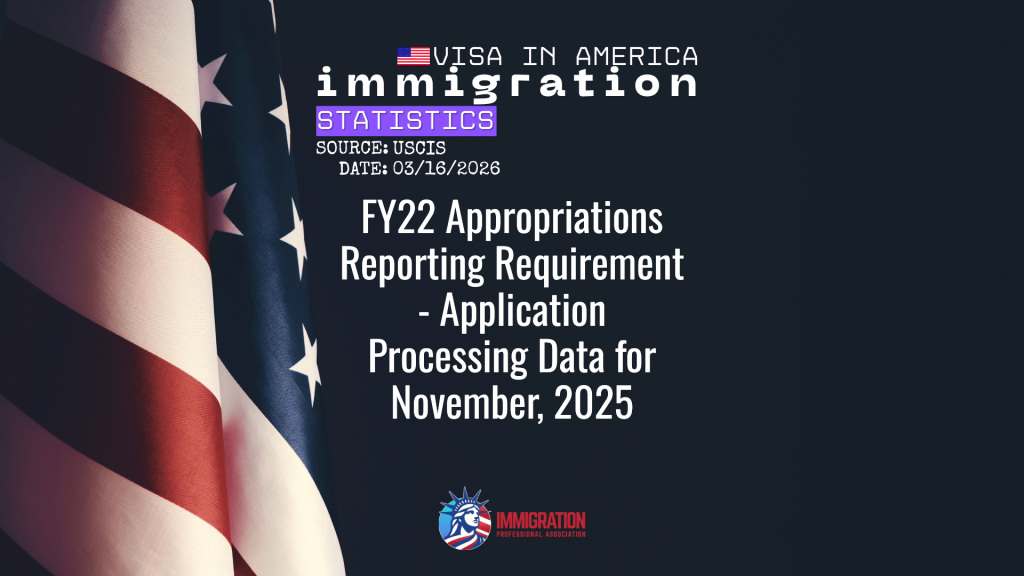
November 2025 USCIS Processing Data Released Under Federal Reporting Mandate
U.S. Citizenship and Immigration Services has published its November 2025 application processing dataset in accordance with the reporting requirements established under the Consolidated Appropriations Act, 2022 (Public Law 117-103). The release provides updated operational statistics on case receipts and completions. It also details pending inventories across immigration form types and agency components. Notably, USCIS Releases November 2025 Processing Data as part of their effort to improve transparency.
The data, made available through USCIS’ public reporting portal, reflects historical workload activity and continues the agency’s implementation of congressionally mandated transparency measures. While the publication does not announce policy revisions or procedural changes, it offers stakeholders a detailed snapshot of adjudication volume and inventory levels during the reporting month. Moreover, USCIS Releases November 2025 Processing Data in alignment with federal reporting mandates.
Background on the FY22 Appropriations Reporting Requirement
The Consolidated Appropriations Act, 2022 directed USCIS to publish regular data concerning immigration benefit request processing. The reporting requirement was designed to improve transparency around application intake, case completions, and case backlogs. This initiative is particularly important in light of pandemic-related disruptions and shifting filing volumes in recent years.
Under this framework, USCIS provides standardized datasets summarizing overall receipts, adjudications, and pending inventory across various form categories. These data releases are separate from the agency’s case processing time estimates. They do not reflect individualized timelines or predictions for specific matters.
The November 2025 publication continues this reporting pattern and provides insight into operational workload during that month. Furthermore, USCIS Releases November 2025 Processing Data to enhance accessibility for applicants and petitioners.
What the Data Reflects
The November dataset captures three core metrics: new case receipts, completed adjudications, and the number of cases pending at the end of the month. Together, these figures allow observers to evaluate trends in filing demand. In addition, they show overall agency throughput.
Receipt numbers may reflect seasonal filing patterns, regulatory or programmatic changes from earlier months, or employer workforce planning cycles. Completion totals can signal operational capacity and staffing efficiency during the reporting period. Pending inventory figures offer a broader view of national backlog levels across form types and service locations.
Because the figures represent historical activity, they do not determine processing speed in any particular case. Instead, they illustrate aggregate workload levels at a specific point in time. In summary, USCIS Releases November 2025 Processing Data to give a broad overview of procedural statistics.
Practical Implications for Applicants and Petitioners
For individuals with pending applications or petitions, updated workload data can help contextualize overall processing conditions. Larger pending inventories may signal periods of sustained demand, while higher completion volumes may indicate efforts to reduce backlogs.
Applicants seeking employment authorization, adjustment of status, naturalization, family-based immigration benefits, or humanitarian relief may review this type of data to better understand national caseload trends. However, ultimate case outcomes and timelines remain dependent on eligibility, completeness of documentation, security checks, and other case-specific factors.
Maintaining valid immigration status, monitoring expiration dates, and filing extensions or renewals in a timely manner remain central compliance considerations. This holds true regardless of broader processing trends.
Considerations for Employers and Institutional Sponsors
Employers, HR departments, and institutional sponsors who rely on petition-based immigration categories may use the November 2025 data to assess national filing and adjudication volumes. High receipt levels in employment-based classifications can affect agency workload distribution. Moreover, they can increase operational pressures.
While the published statistics do not provide predictive timelines for specific categories such as H-1B, L-1, O-1, or employment-based adjustment filings, they may inform strategic workforce planning and documentation preparation cycles. Employers should remain attentive to work authorization validity periods, I-9 compliance obligations, and advance filing opportunities where available. Additionally, USCIS Releases November 2025 Processing Data is a resource that employers may reference for up-to-date workload analysis.
Continued Transparency Through Published Operational Data
The November 2025 release reflects USCIS’ continued compliance with statutory reporting obligations under federal appropriations law. By making operational metrics publicly accessible, the agency provides applicants, employers, attorneys, and policymakers with ongoing insight into filing patterns and adjudication activity.
As required reports continue to be published, stakeholders gain a clearer understanding of national caseload volumes and administrative workload trends. These disclosures are intended to promote transparency in agency operations. Meanwhile, individual case determinations remain governed by the Immigration and Nationality Act, applicable regulations, and case-specific eligibility criteria.